
ROB RUN Notoriety Guide: Risk, Loot & Police Heat
How notoriety works in ROB RUN: why staying active in Looty Bay raises loot and police attention, how to set an exit threshold, and what is still unconfirmed.
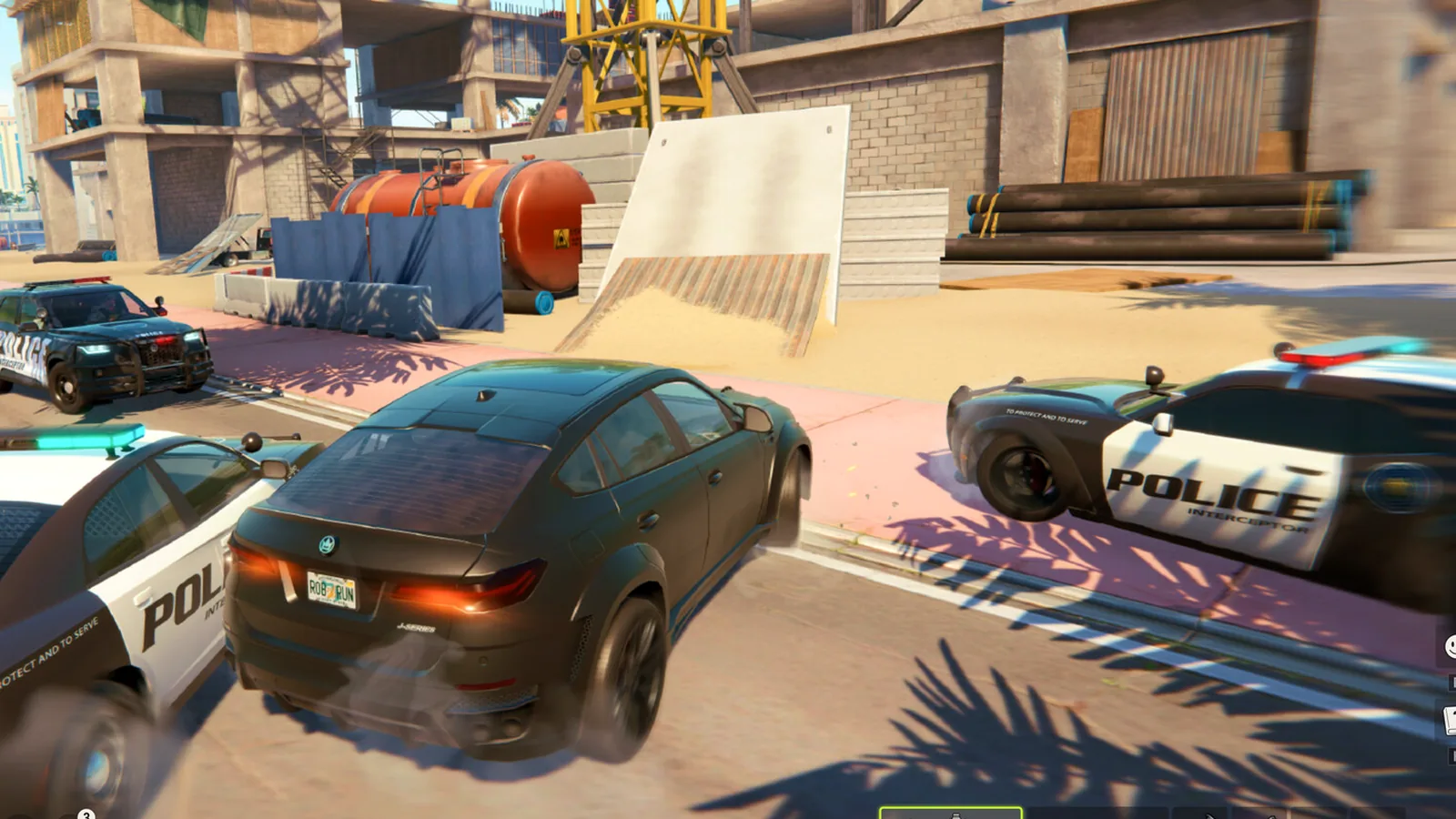
Quick answer. Notoriety rises the longer you stay active in Looty Bay. Higher notoriety can raise loot quality and payouts, and it raises police attention at the same time. Set an exit threshold before you enter a target, and leave when you hit it.
- Notoriety is a risk dial, not a score.
- The reward is better loot and prices.
- The cost is more police and more players looking for you.
- Leaving the city resets your criminal status; the exact notoriety reset is not fully documented.

What notoriety is
Notoriety is the game's pressure system. It models the idea that a criminal who keeps working the same city becomes known, and a known criminal is easier to find.
The community model is simple:
| Notoriety | Loot and payouts | Police attention | Best for |
|---|---|---|---|
| Low | Baseline | Low | Learning routes, first heists |
| Medium | Better | Rising | Efficient repeat runs |
| High | Best | High | Short, high-value pushes |
| Very high | Best | Very high | Groups with a plan and an exit |
Kefir has not published a numeric table. Treat this as a behaviour model, not a formula.
What raises notoriety
The confirmed driver is time spent active in the city. Criminal actions and combat plausibly contribute, but the game does not expose a meter with a breakdown.
What players observe:
- A fresh session starts quiet.
- The longer you stay in Looty Bay, the more police pressure you meet.
- The effect compounds if you keep robbing instead of banking and leaving.
The practical takeaway is the same either way: a run has a natural length, and extending it increases risk faster than it increases reward.
The exit threshold
An exit threshold is a rule you set before the run. Examples:
- "I leave after one bag."
- "I leave when the fence is more than two streets away."
- "I leave when I hear sirens twice."
- "I leave after the second police contact."
The threshold matters because decisions made mid-heist are biased toward "one more room". A rule made before the mask goes on is not.
Write the threshold down if you have to. The players who lose the most are the ones who improvise the exit after the bag is full.
Risk and reward
Notoriety is not a punishment; it is a trade. A high-notoriety run can pay more for the same cargo, and it can also end with a lost bag, a jail timer and a respawn.
The break-even question is simple:
- If the extra payout is worth more than the gear and cargo you are risking, push.
- If it is not, bank and reset.
For a solo player, the answer is usually to reset earlier. For a group with a cover player and a vehicle, the answer can be to push one more target.
Managing notoriety
Short runs
The most reliable strategy is more short runs, not one long run. Two clean store robberies with a bank trip between them beat one five-target spree that ends in a surrender.
Bank between runs
Banking does not necessarily lower notoriety, but it protects the profit. A high-notoriety run with an empty bank account is all risk and no compounding.
Leave the city
Criminal status clears when you leave Looty Bay, and you choose a role again the next time you enter. That is the clean reset point. Use it before a shopping trip or a base-building session.
Change your route
If the same fence route is hot, sell elsewhere. Notoriety follows the player, not the route, but the response does not have to meet you at the same van every time.
Notoriety is one of the least documented systems in the launch build. The direction of the effect is consistent across player reports; the exact numbers, decay rate and reset conditions are not. Do not plan around a specific threshold.
Notoriety and police play
If you are playing police, notoriety is a targeting tool. A criminal who has been active longer is more likely to be carrying value and more likely to be worth the chase.
It is also a warning. A high-notoriety criminal is not necessarily alone; the same pressure that brings police can bring other criminals looking for an easy bag.
The police guide→ covers the enforcement side.
Notoriety and the wipe
The weekly Federal Raid resets plots, bases, weapons and cash. It does not need to reset notoriety for the cycle to feel fresh, because the assets that made a high-notoriety run worthwhile are gone.
Expect the first day after a wipe to be quieter. Everyone is rebuilding, and the players who push hardest early are the ones with the most to lose.
FAQ
What raises notoriety in ROB RUN?
Spending time active in Looty Bay is the confirmed driver. Criminal actions and combat likely contribute, but the game does not publish a numeric breakdown.
Does notoriety reset when I leave the city?
Leaving the city clears your criminal status and lets you choose a role again on the next entry. The exact notoriety reset behaviour is not fully documented.
Is high notoriety good or bad?
Both. It can improve loot and payouts and it increases police attention. Push only when the extra reward is worth the gear and cargo at risk.
How do I lower notoriety?
The practical method is to end the run: bank the profit, leave the city and start fresh. Short runs keep the pressure low.
Official source: Kefir Help Center, ROB RUN Steam store page and Steam announcements (checked 2026-11-06).
Sources
- Kefir Help Center — Criminal status and police ↗ — role and city rules.
- ROB RUN Steam store page ↗ — official feature list.
- ROB RUN Steam announcements ↗ — police response changes.